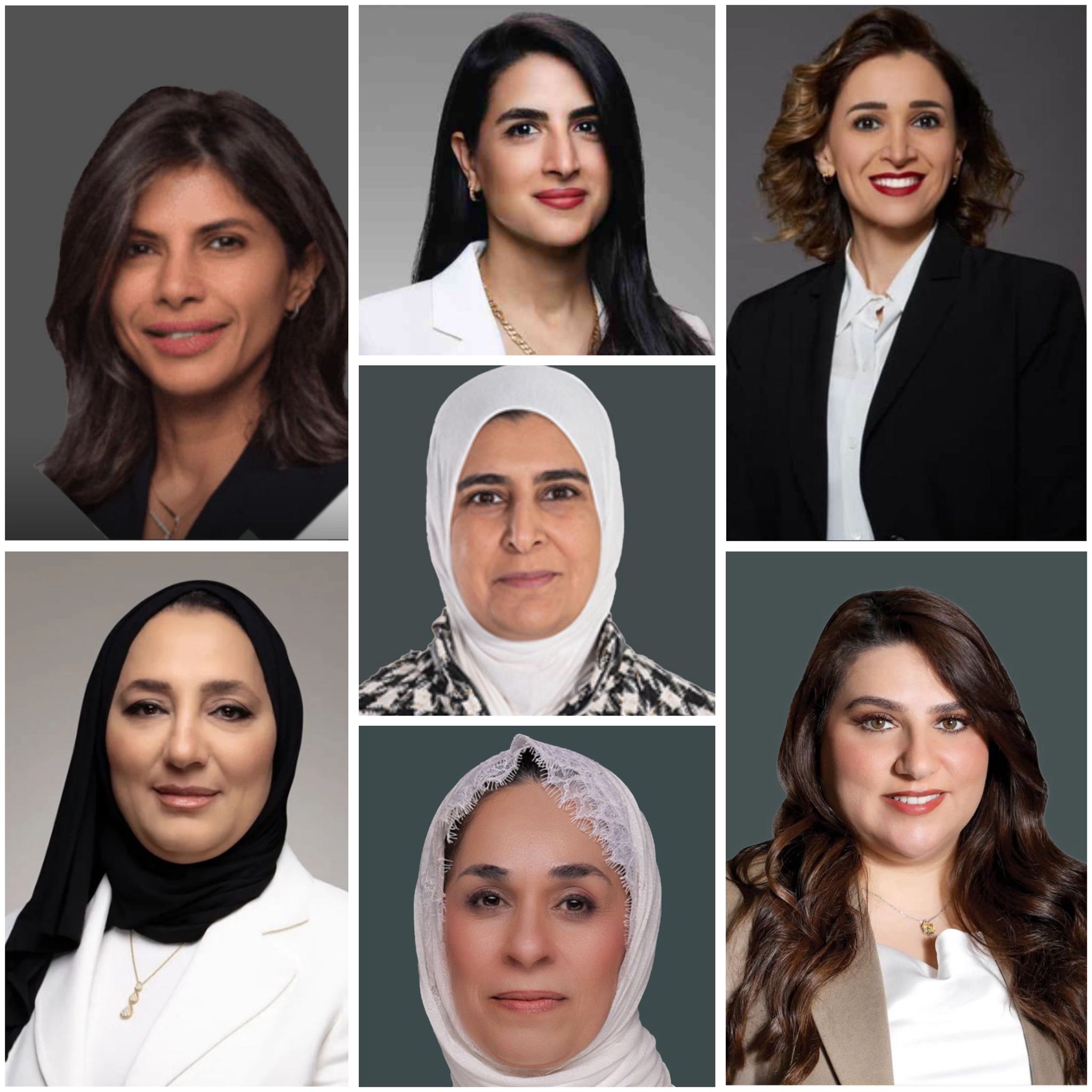
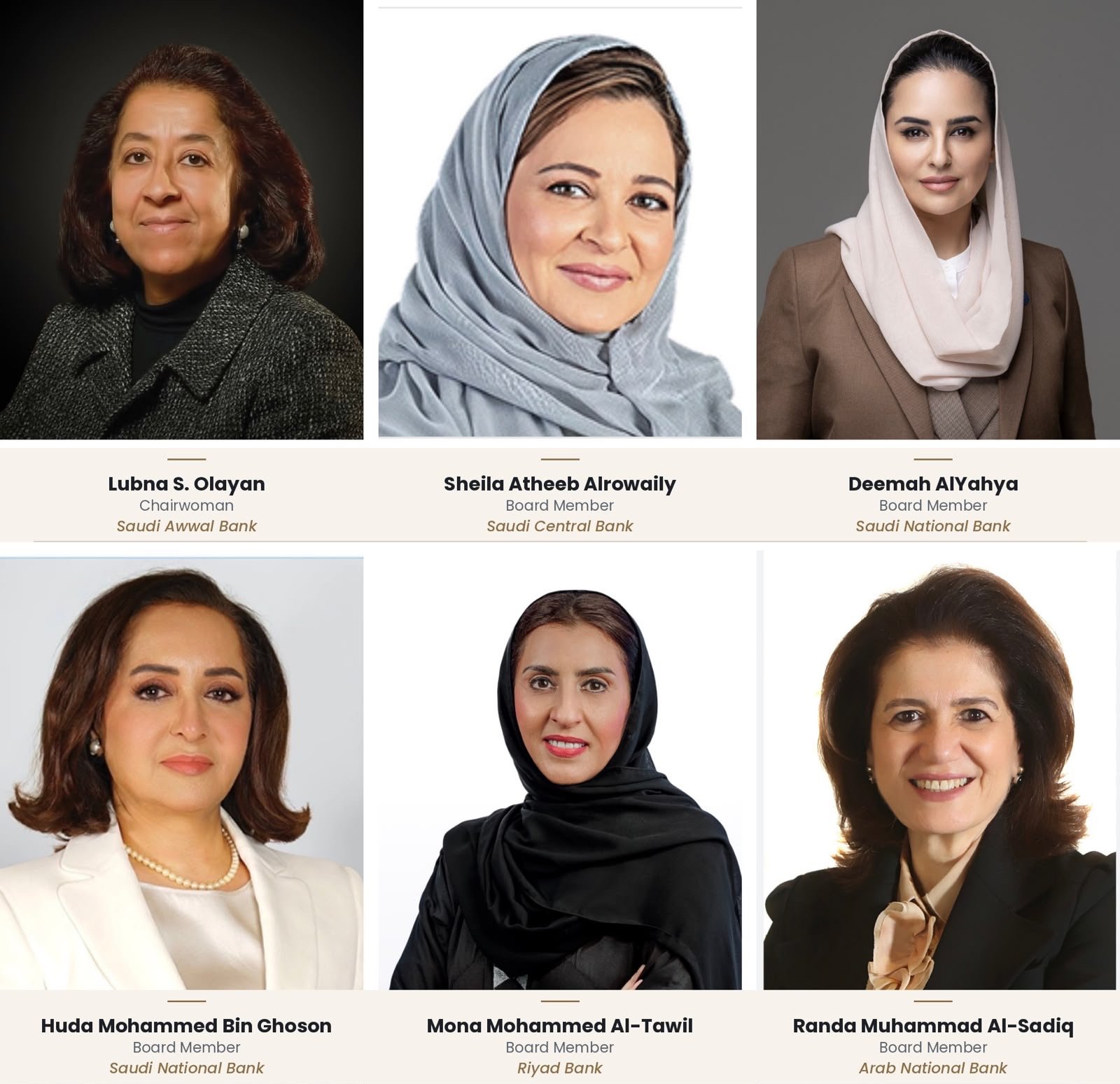
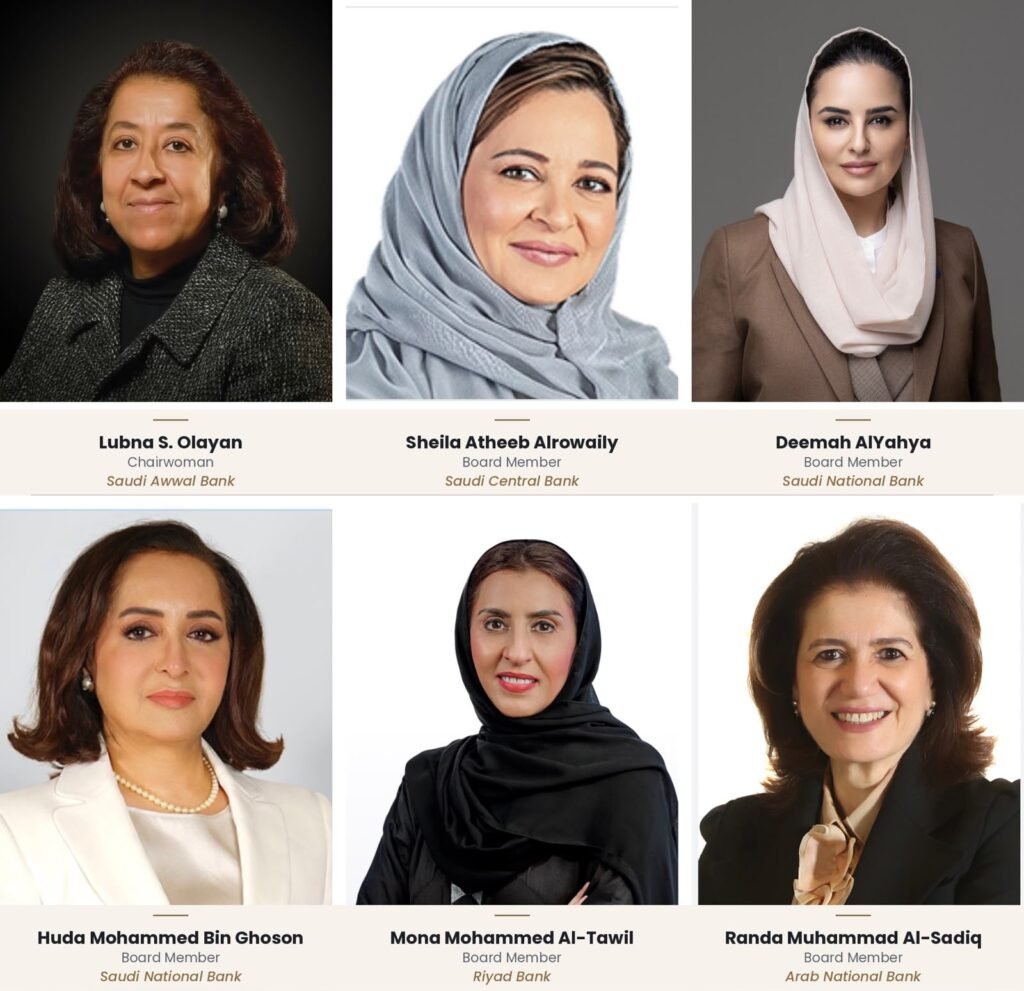
Six women now sit on the boards of Saudi Arabia’s major listed banks, while one female executive has broken through to the Saudi Central Bank’s board, marking a pivotal moment in the Kingdom’s financial governance landscape.
1. Lubna S. Olayan, Saudi Awwal Bank, Chairwoman
2. Deemah AlYahya, Saudi National Bank, Board Member
3. Huda Mohammed Bin Ghoson, Saudi National Bank, Board Member
4. Maram Mohammed Alnumay, Alinma Bank, Board Member
5. Mona Mohammed Al-Tawil, Riyad Bank, Board Member
6. Randa Muhammad Al-Sadiq, Arab National Bank, Board Member
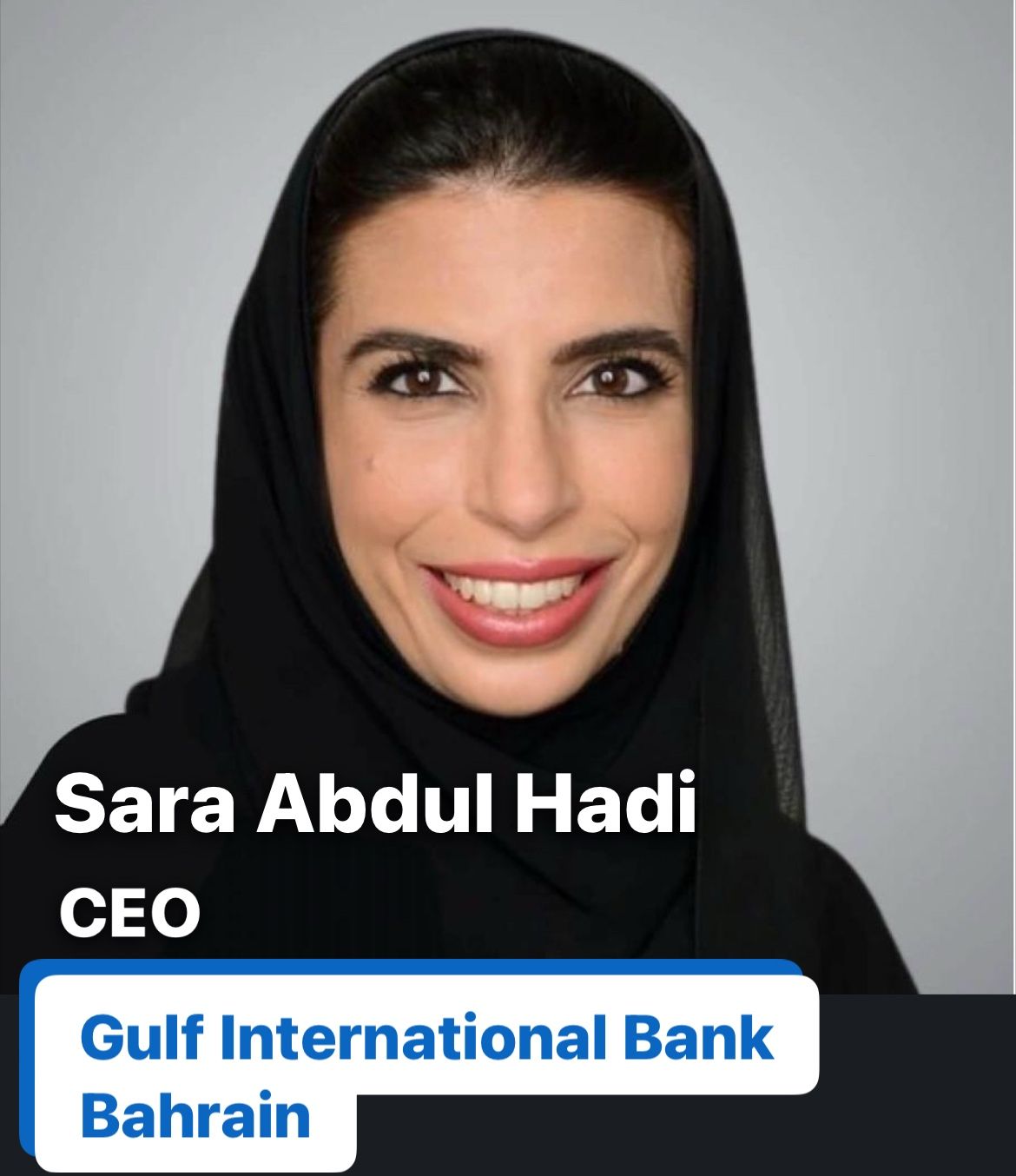
And: Sheila Atheeb Alrowaily, Saudi Central Bank, Board Member
The State of Play
Across ten of Saudi Arabia’s largest listed banks, six women currently occupy board seats, a figure that both underscores progress and exposes how much remains to be done. Of those six, one has achieved what no Saudi woman has done before: leading a major listed bank as Chairwoman. Meanwhile, five of the Kingdom’s largest financial institutions maintain all-male boardrooms, signaling that the shift toward gender parity in banking governance remains incomplete and uneven. Additionally, one woman has shattered the regulatory ceiling by joining the Saudi Central Bank’s board, the first woman ever appointed to this position.
This snapshot, captures a pivotal moment in Saudi Arabia’s banking sector, a moment where growing numbers of women are entering the corridors of financial decision-making, yet the pace of institutional change still lags behind the technical expertise and leadership capability available.
Breaking the Highest Ceiling: Lubna S. Olayan
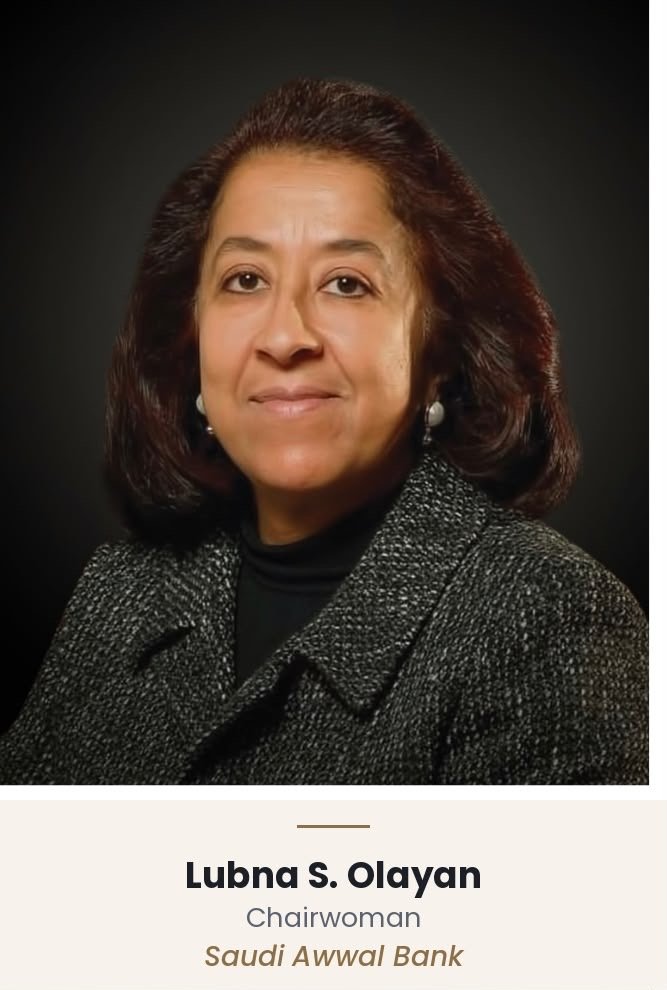
The most significant threshold has already been crossed. Lubna S. Olayan, Chairwoman of Saudi Awwal Bank, SAB, holds the highest-ranking title any Saudi woman has occupied in banking. Reappointed for a new three-year term beginning January 1, 2026, following Central Bank approval on December 29, 2025, Olayan’s tenure represents more than individual achievement; it has become the reference point for gender representation in Gulf banking governance. First appointed to lead what was then the Saudi British Bank in June 2019, Olayan became the first Saudi woman to head a listed bank. She has since been reappointed twice, a sign of institutional confidence in her leadership. Her career trajectory reveals a different model entirely from the typical banking executive path. Before assuming the SAB chairmanship, she spent over three decades as CEO of Olayan Financing Company, building deep expertise in corporate finance and business strategy.
Olayan’s educational credentials, a bachelor’s degree in agronomy from Cornell University and an MBA from Indiana University, reflect the diverse intellectual grounding she brings to the sector. Her board presence extends beyond SAB; she sits on the boards of Schlumberger and Ma’aden, and maintains advisory roles with Bank of America and McKinsey. In late 2025, she was named Saudi Co-Chair of the U.S.,Saudi Business Council alongside Citigroup CEO Jane Fraser, positioning her as a key bridge between American and Saudi financial ecosystems. Her significance transcends the individual. Olayan’s appointment and reappointment signal that Saudi Arabia’s Central Bank and institutional frameworks have moved beyond tokenistic inclusion to embrace genuine leadership opportunity for women, provided they bring the requisite expertise and networks.
The Specialists: Bringing New Competencies to Traditional Tables
Not all paths to the boardroom follow the same trajectory as Olayan’s. A notable trend is emerging: technically credentialed specialists in risk management, investment, and digital innovation are entering Saudi bank boards, often without prior executive-suite experience. This signals a shift in how boards are evaluating competency.
Maram Mohammed Alnumay: Risk and Investment Expertise
Maram Mohammed Alnumay, who joined Alinma Bank’s board in May 2025, embodies this new profile. Rather than building her career inside a bank or traditional finance house, Alnumay rose through the pension-fund and asset-management sector as a technical specialist. She spent seven years at Hassana Investment Company, one of the region’s largest pension-fund managers, rising to Head of Risk Management by 2022 and playing a direct role in the merger of the Public Pension Agency into GOSI. Her credentials, a bachelor’s degree in Finance from King Saud University, a master’s from DePaul University, plus both CFA and CAIA charter designations, position her as a rare combination of regional and international financial expertise. At Alinma, she serves on both the Executive Committee and the Audit Committee. Her appointment reflects a wider trend of technically specialized risk professionals entering boardrooms, suggesting that Saudi banks are increasingly seeking formal risk-management credentials alongside traditional executive experience.
The Policy Bridge: Deemah AlYahya’s Digital Mandate
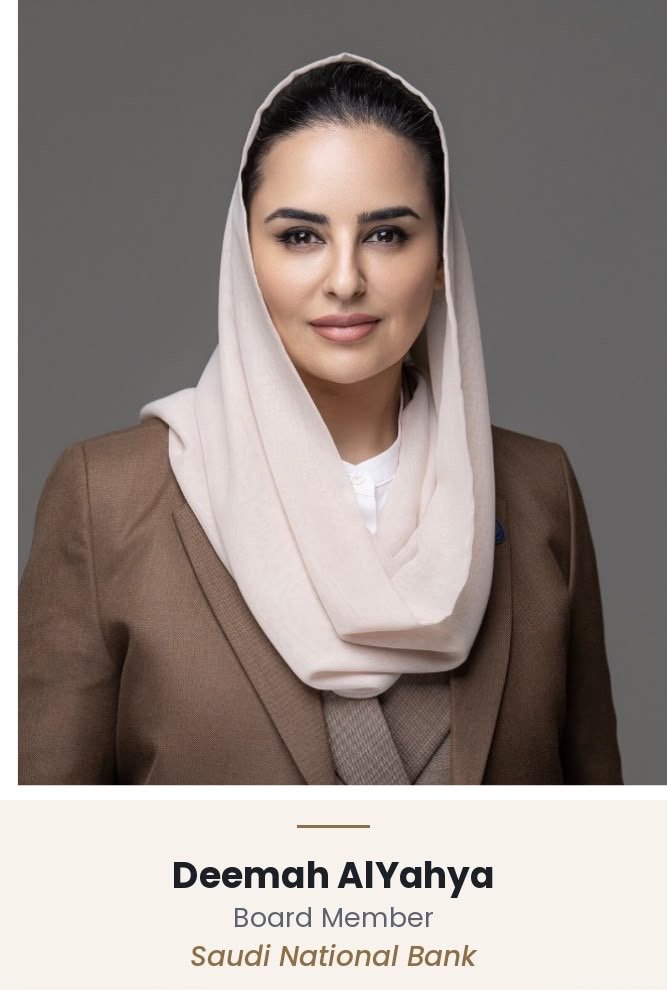
Sometimes a board appointment signals a bank’s strategic priorities. Deemah AlYahya’s seat on Saudi National Bank, SNB, reflects the Kingdom’s pivot toward digital transformation and policy-facing expertise. AlYahya is best known internationally as a technology diplomat. She is the founding Secretary-General of the Digital Cooperation Organization, elected in 2021, a position that made her the first Saudi woman to lead an international intergovernmental organization. Under her leadership, the DCO expanded to sixteen member states and secured observer status at the United Nations. Before that, she held senior roles including Chief Innovation Officer at the Misk Foundation and CEO of the National Digitization Unit at Saudi Arabia’s communications ministry.
Her educational pathway, computer science from King Saud University plus executive programs at INSEAD and Harvard Business School, reflects a distinctly tech-forward professional identity. Beyond her formal roles, she founded Women Spark, described as the Kingdom’s first women’s angel investment network, extending her impact into venture capital and entrepreneurship support. What makes AlYahya’s board presence distinctive is the non-traditional expertise she brings: digital-economy policy expertise at a traditional banking table. As banks across the region grapple with fintech disruption and digital transformation, her presence signals that SNB values perspective from outside conventional banking circles.
The Operational Architects: Huda Mohammed Bin Ghoson
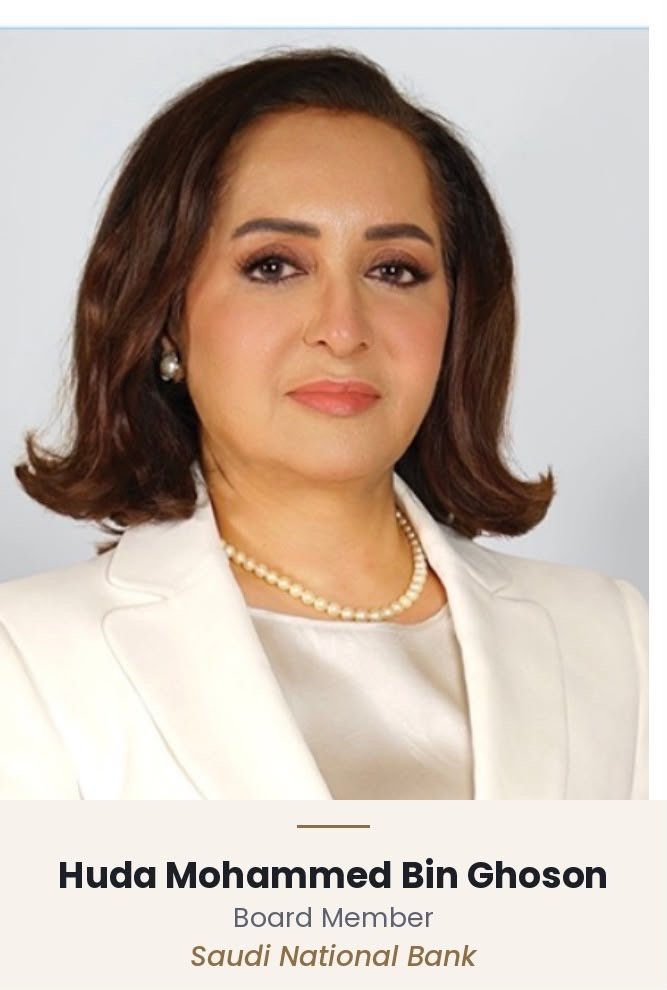
Huda Mohammed Bin Ghoson, also serving on SNB’s board since September 2022, represents yet another profile: the executive who rose through a Fortune 500 company to become its highest-ranking female leader. Her entire career was built inside Saudi Aramco, where she became the first woman to hold an executive position in the company’s history. She served as Executive Director of Human Resources from 2012 until her retirement in 2017, a role that positioned her at the intersection of organizational strategy, talent management, and change leadership. Her educational foundation includes a bachelor’s degree in English Language and Literature from King Saud University and an MBA from American University in Washington, D.C.
Beyond SNB, Bin Ghoson serves as a director of Bupa Arabia for Cooperative Insurance and has previously sat on the boards of GOSI, Credit Suisse Saudi Arabia, and several Aramco-affiliated entities. She has chaired the Arabian Society for HR Management and published a book titled Unbounded in 2022. Forbes Middle East has ranked her among the most powerful Arab businesswomen in executive management. Her profile combines deep experience in organizational transformation with policy engagement, precisely the competencies boards need as they navigate regulatory change and demographic shifts in their workforce.
The Investment Bankers: Mona Mohammed Al-Tawil and Capital Markets Leadership
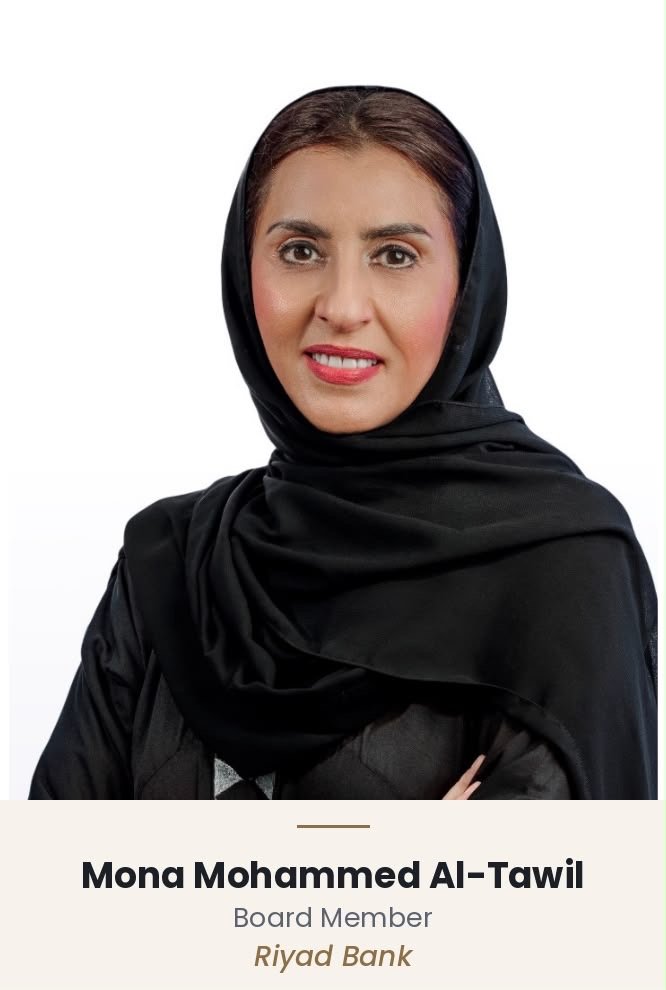
Mona Mohammed Al-Tawil, who has served on Riyad Bank’s board since 2022 and currently chairs its Audit Committee, brings a distinctly different expertise: investment-banking leadership combined with policy-facing advisory credentials. Al-Tawil achieved a notable first when she was named CEO of Emirates NBD Capital’s Saudi unit in 2018, becoming the first woman to lead that firm’s Saudi operations, covering syndicated loans, equity, and debt capital markets. She later became CEO of FAB Capital and earlier headed structured finance at HSBC Saudi Arabia. She has also advised Saudi Arabia’s Ministry of Finance and sat on the Investment and Securities Committee of the Riyadh Chamber of Commerce.
Her educational credentials, bachelor’s degree in Accounting from King Saud University and a master’s degree in Business Management from George Washington University, reflect a blend of technical accounting knowledge and strategic business training. Her profile places her among the more internationally networked women in Saudi banking governance, bridging investment banking, regulatory engagement, and capital-markets expertise.
The Cross-Border CEO: Randa Muhammad Al-Sadiq’s Regional Mandate
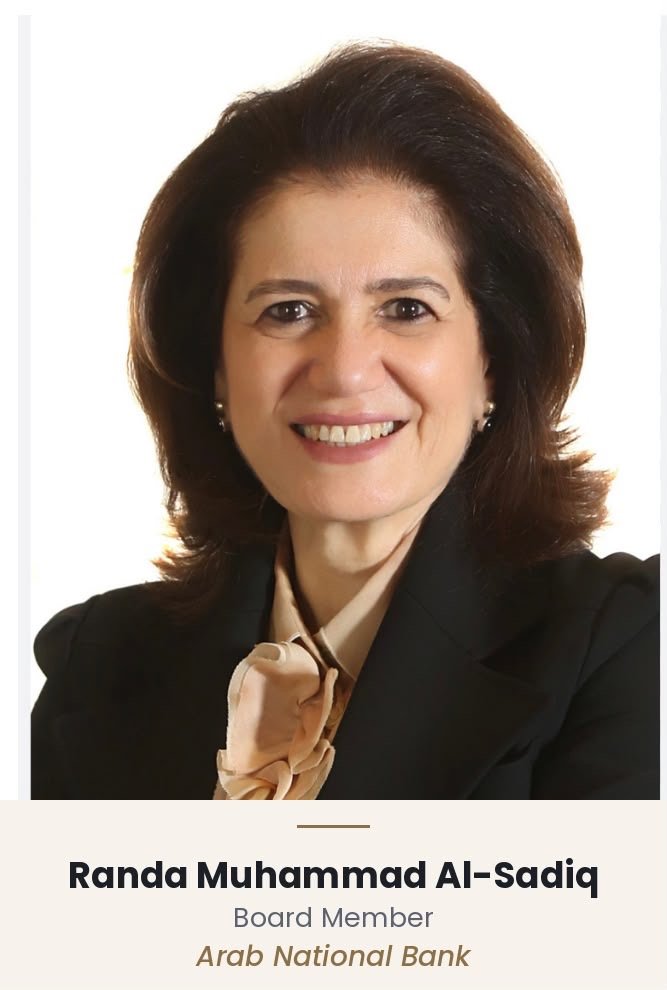
Perhaps the most unique profile belongs to Randa Muhammad Al-Sadiq, who brings a distinctly cross-border dimension to Arab National Bank, ANB’s board. Al-Sadiq currently serves as Managing Director and Chief Executive Officer of Arab Bank PLC in Jordan, one of the oldest and largest banking groups in the Arab world. On ANB’s board, she chairs the Strategy Committee.
Before her current role, she built her career at the National Bank of Kuwait, holding positions including General Manager of the International Banking Group in Kuwait and Managing Director and Executive Director of Treasury, as well as Director of Current Assets Management for the bank’s London operations. Her educational foundation includes a bachelor’s degree in Business Administration and a master’s degree in Banking and Financial Sciences, both from the American University of Beirut.
Al-Sadiq’s dual mandate, leading a major Jordanian bank while serving on a Saudi bank’s board, makes her one of the few women in the Kingdom’s banking governance with an active cross-border CEO role. This combination of regional operations experience and strategic governance presence gives her a unique vantage point on MENA banking dynamics.
The Regulatory Breakthrough: Sheila Atheeb Alrowaily at the Saudi Central Bank
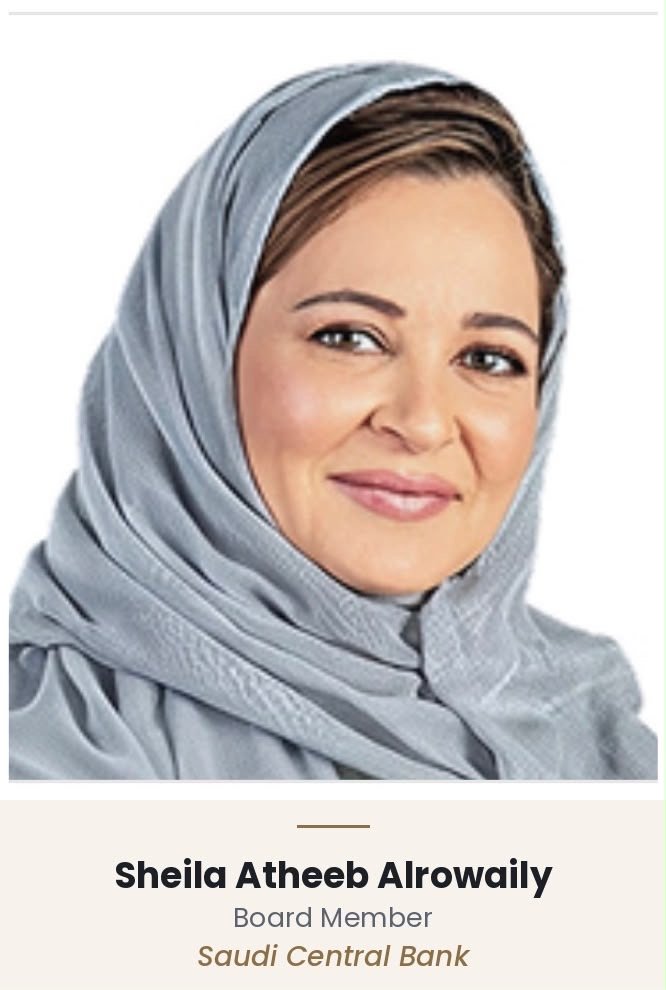
A significant yet often overlooked development occurred in June 2022 when Sheila Atheeb Alrowaily became the first woman appointed to the board of directors of the Saudi Central Bank, SAMA. This appointment represents a breakthrough at the regulatory level, signaling that women’s leadership is compatible with the highest institutional standards in Saudi financial governance.
Alrowaily brings over two decades of experience in trading and investment management, having spent most of her career at Saudi Aramco. She began in 1998 as a money market trader and rose through various financial roles, eventually becoming Director of the Investment Management Department from 2009 to 2019. Since January 2019, she has served as CEO of Wisayah Investment Company, a subsidiary of Saudi Aramco that manages the company’s pension funds, defined contribution funds, and other long-term investment portfolios.
Her educational credentials include a bachelor’s degree in Interior Architecture from King Faisal University, a master’s degree in Financial Management from the American University of Beirut, and an MBA from the Massachusetts Institute of Technology, obtained in 2018. Beyond her SAMA role, Alrowaily serves on the boards of Hassana Investment Company and Saudi Aramco Power Co. She was included in Heart Energy’s 2021 list of the 25 most influential women in the energy field. Her appointment to the Central Bank’s board underscores the Kingdom’s commitment to women’s economic participation at the highest regulatory levels, complementing the progress visible in commercial banking boards.
The Still-Empty Boardrooms: Five Banks, No Women
The progress represented by these six women in commercial banking and one in the central bank should not obscure the reality that remains: five Tadawul-listed banks currently maintain all-male boards.
– Al Rajhi Bank
– Bank Albilad
– Bank AlJazira
– Banque Saudi Fransi
– Saudi Investment Bank, SAIB
These five institutions collectively represent significant capital, retail reach, and market influence. The absence of women on their boards is not a technical oversight; it reflects institutional decisions about governance composition, recruitment practices, and board-nomination processes.
The Broader Context: Regulatory and Cultural Shifts
These appointments do not occur in a vacuum. Saudi Arabia’s banking sector operates under evolving regulatory frameworks that increasingly emphasize governance quality, diversity, and risk management. The Central Bank of Saudi Arabia, SAMA, has signaled commitment to women’s economic participation as part of Saudi Vision 2030, and board composition is one visible metric of that commitment.
Moreover, the Kingdom’s push toward economic diversification, including the expansion of financial services, fintech, and capital-markets development, has created demand for specialized expertise that is not easily found within traditional banking cohorts. Women in technology, investment management, risk analysis, and policy roles represent untapped talent pools that forward-thinking boards are beginning to access.
What Comes Next?
The presence of six women on Saudi banking boards and one at the Central Bank represents genuine progress. Lubna Olayan’s reappointment as Chairwoman of SAB signals institutional confidence. The growing diversity of pathways from executive advancement to technical specialization to policy expertise suggests that future appointments may accelerate rather than plateau.
However, the persistence of five all-male boards among major listed banks indicates that progress is neither inevitable nor uniform. Continued advancement will require: Intentional recruitment strategies that actively seek women candidates across all experience levels and functional specialties. Board-nomination processes that value diverse forms of expertise, not just traditional executive backgrounds. Regulatory encouragement that makes diversity a standard governance expectation, not a discretionary choice. Visibility and mentorship so that talented women at all career stages understand that pathways to banking boards exist and are accessible.
The six women now at these tables have proven competence, brought fresh expertise, and demonstrated leadership. The question for Saudi Arabia’s banking sector is whether their presence marks the beginning of systematic change or remains an anomaly confined to the most progressive institutions.
The answer will be written in the boards that add their successors.
by M.Bousselmi