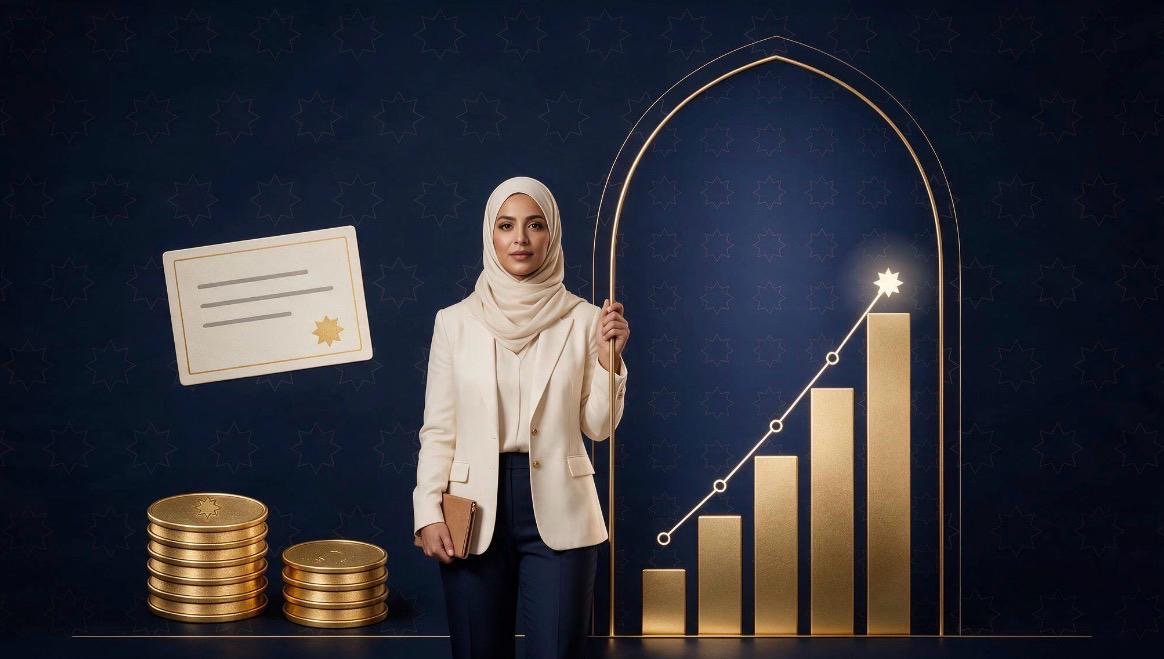
From Murabaha to Sukuk, Sharia-compliant finance is opening a path for women that runs from first account to entrepreneurship, investment and, ultimately, capital allocation.
The fintech industry is taking the world by storm; that much we know. Far fewer people realise that, according to studies cited by the IMF and the World Bank Group, the MENA region could unlock $575 billion in additional economic output annually if women participated in the economy at the same rate as men. Islamic banking is increasingly a go-to source for women in the region, and their engagement with it, as clients, entrepreneurs and investors, is growing at a rapid pace.
Women Entrepreneurs Want More Than Small-Business Loans
The image of the woman entrepreneur as someone seeking a small loan to start a modest business increasingly fails to capture the diversity of women-led enterprises across MENA. Women are building businesses across technology, healthcare, professional services, manufacturing, retail, food, education and other sectors. As those businesses mature, their financial requirements become more complex.
Murabaha, for example, is commonly structured around the purchase and resale of an identified asset at a disclosed markup. Ijara uses a leasing arrangement, making it potentially relevant where the customer needs access to equipment or another asset without purchasing it outright at the beginning. Partnership structures such as Musharakah can connect financing with an underlying commercial venture.
The important point is not that one structure is automatically more suitable for women. It is that financing can be connected more closely to the economic activity requiring capital. That creates an opportunity for financial institutions to assess more than traditional collateral. Business revenues, cash flows, contracts, assets and demonstrated commercial potential can all form part of a more nuanced understanding of an enterprise.
For women entrepreneurs, this distinction can be crucial. Financing should not merely help a business survive its next few months. Where the underlying business is viable, it should have the potential to support its next stage of growth.
What Happens When More Women Begin Actively Allocating Capital?
Capital allocation influences which businesses receive investment, which sectors expand and which entrepreneurs gain access to resources. As women accumulate greater financial assets, their decisions as investors can therefore become economically significant. Financial inclusion, in other words, can eventually become a conversation about who controls and directs capital.
Financial inclusion can eventually become a conversation about who controls and directs capital.
Sukuk Enter the Conversation for Women Investors
Sukuk deserve particular attention in that transition. Put simply, Sukuk are Sharia-compliant investment certificates structured around interests in underlying assets, services, projects or investment activities. Although they can have characteristics comparable to conventional fixed-income investments, their legal and financial structures differ because they must comply with applicable Sharia principles.
For women accustomed to thinking primarily about bank deposits and conventional investment products, Sukuk can introduce another way of thinking about investment. The attraction is not that Sukuk are automatically safer, more profitable or appropriate for every investor. Like other investments, individual Sukuk can involve credit, market, liquidity and other risks. What makes them relevant is the combination of investment participation and Sharia-compliant structuring.
That distinction could become increasingly important as women move further into investing. The challenge is accessibility. This is where Islamic banking intersects with financial technology. A woman should not have to become a capital-markets specialist before she can understand an investment opportunity.
If digital platforms can make investment information easier to navigate while maintaining appropriate regulatory safeguards, more individual investors could potentially participate in Islamic capital markets. For women, that represents an important psychological and financial shift: moving from being observers of capital markets to participants in them.
A Promising Opportunity for MENA’s Islamic Banks
The next opportunity for the region’s Islamic banks lies in understanding that women are not one homogeneous customer segment. A young professional building her first investment portfolio has different needs from an entrepreneur preparing to expand internationally. A founder managing working capital has different requirements from a woman managing family wealth. A first-time saver needs a different financial journey from an experienced investor.
That makes customer data increasingly important. Banks can use data responsibly to understand where women encounter friction:
- ✓ Is the barrier a lack of collateral?
- ✓ Irregular income?
- ✓ Limited financial history?
- ✓ Product complexity?
- ✓ Digital access?
- ✓ A lack of investment knowledge?
The answers can help institutions develop products around actual financial behaviour rather than simply creating products labelled “for women.”
This is an important distinction. Gender-responsive banking should not mean assuming that every woman wants the same product. It should mean recognising where structural or behavioural gaps are preventing different groups of women from using financial services effectively. The role of women within financial institutions matters here too.
Greater representation of women in product development, investment teams, senior management and financial decision-making can contribute to a deeper understanding of customer needs. It can also ensure that women are involved not only in consuming financial products but in shaping the systems that create them.
Combining Islamic Banking, Fintech and Investment
Technology could become one of the strongest catalysts for this evolution. The opportunity for Islamic banking is not simply to place existing banking products on mobile applications. It is to connect previously separate parts of the financial journey. Imagine a woman entrepreneur managing business payments through a digital platform, monitoring her cash flow, accessing appropriately structured financing, and later using the same broader ecosystem to explore investment opportunities.
Fintech can improve distribution and customer experience. Banks can provide regulated infrastructure and financial expertise. Investment platforms can provide access to capital-market instruments. Financial-education services can help customers understand increasingly sophisticated products. Together, these elements can create a financial ecosystem rather than a collection of disconnected services. For MENA’s Islamic banks, that may represent a more durable opportunity than short-term campaigns designed to attract women as customers.
Women-Focused Campaigns and Long-Term Financial Ecosystems
There is a growing temptation across financial services to approach women through dedicated campaigns, special offers or isolated products. Those initiatives can have value, but they do not necessarily create lasting financial relationships. A more ambitious model would follow women through changing economic circumstances. The woman who opens her first account today may become an entrepreneur tomorrow. The entrepreneur may become an employer. The business owner may become an investor. The investor may eventually become a significant allocator of family or institutional capital.
The implication for financial institutions is clear: financial education should not sit outside product strategy. It can become part of the product itself.
Financial education should not sit outside product strategy. It can become part of the product itself.
What Happens When Women Become Capital Allocators?
This may ultimately be the most intriguing question in the entire discussion. A woman who receives financing is participating in the economy. A woman who owns a business is creating economic value. But a woman who invests capital is also influencing where future economic value is created. She decides which assets to hold, which businesses to support, and how wealth is preserved for the future.
That is why Islamic banking has the potential to play a broader role in women’s economic participation across MENA. Its ecosystem encompasses financing, savings, investment, Sukuk, social finance and, increasingly, digital financial services. The opportunity for financial institutions is to connect these components intelligently. For women, the opportunity is equally significant. The financial journey does not have to end when they gain access to an account or secure a loan. It can progress toward ownership, investment and wealth creation.
By Omkar Kurtkoti